
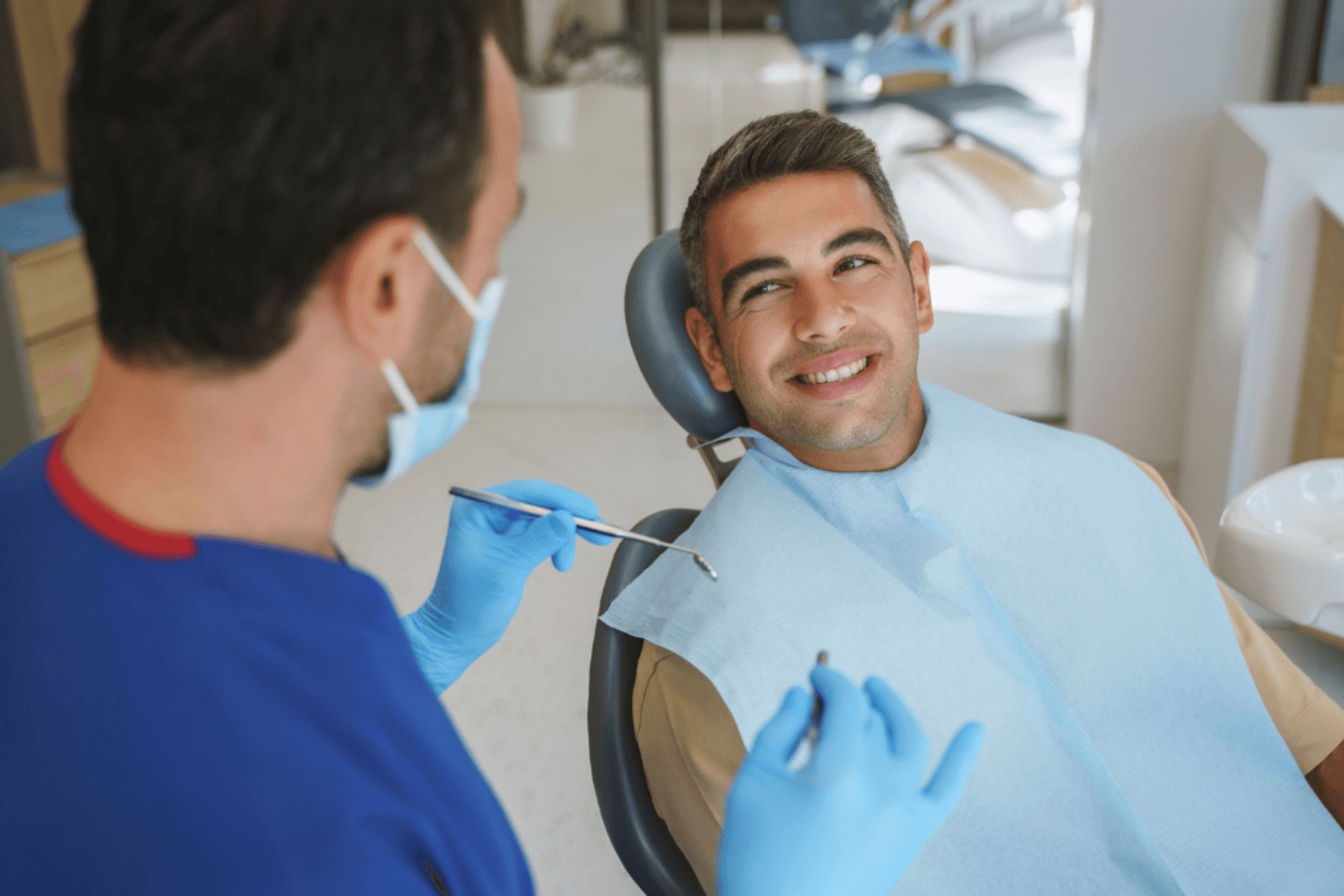
A new patient dental exam is more thorough than a regular checkup. Plan for about 60–90 minutes for the first visit. The appointment covers paperwork, X-rays, a head-and-neck exam, a tooth-by-tooth exam, gum measurements, an oral cancer screening, often a cleaning, and a conversation about findings and a treatment plan. Knowing what's coming makes the visit shorter and less stressful — especially if it's been a while since your last dental appointment.
Before the Appointment
Most dental offices, including ours, send paperwork ahead of time. Filling it out at home saves 15 minutes at check-in. The forms usually include:
• Personal and contact information.
• Medical history — conditions, surgeries, allergies, medications.
• Dental history — when you last had a cleaning, X-rays, or any major work.
• Insurance information if applicable.
• HIPAA acknowledgment and consent forms.
Bring an ID and your insurance card. If you've had recent X-rays at another office (within the last year or two), have them sent over before your visit — that may save you having to get a new set.
Step 1: Check-In and Vitals
The front desk verifies paperwork, takes a quick photo for your chart, and may take a blood pressure reading. The blood pressure check isn't standard at every office, but it's a useful health screening — and matters for patients considering sedation or oral surgery.
Step 2: X-Rays
New patient X-rays typically include:
• Bitewings (4 small images): Show the spaces between back teeth and detect cavities that aren't visible to the eye.
• Panoramic (1 large image): Shows the full jaw, all teeth, sinuses, and TMJ. Important for new patients and for tracking long-term changes.
• Periapical images as needed: Close-up shots of specific teeth that have visible concerns.
Modern digital X-rays use a fraction of the radiation of old film X-rays — roughly the equivalent of a few hours of background radiation from being outdoors.
Step 3: Head and Neck Exam
Before the tooth-by-tooth exam, the dentist looks outside the mouth: jaw joints (TMJ), lymph nodes in the neck, range of motion of the jaw, symmetry of the face. This is often where issues like TMJ disorder or thyroid concerns first get flagged.
Step 4: Tooth-by-Tooth Exam
The dentist examines every tooth visually and with a small instrument, checking for:
• Cavities.
• Cracks, chips, or wear.
• Old fillings, crowns, or other dental work that needs attention.
• Bite alignment and how teeth come together.
• Soft tissue changes inside the mouth.
Findings are noted in a chart, often with a numbering system (tooth #14 has a small cavity on the chewing surface, for example).
Step 5: Periodontal (Gum) Exam
The hygienist uses a small probe to measure the depth of the gum pocket around each tooth. The numbers (1–3 mm is healthy, 4+ mm suggests gum disease) help diagnose periodontal disease and track gum health over time. Some bleeding during this exam is common and doesn't mean anything is wrong, but consistent bleeding is a useful diagnostic clue.
Step 6: Oral Cancer Screening
The dentist examines the tongue, the floor and roof of the mouth, the cheeks, the back of the throat, and the lips, looking for any unusual changes. The whole screening takes under two minutes and is one of the most underrated benefits of regular dental visits. Early-stage oral cancers are highly treatable; the same lesions found late are not.
Step 7: Cleaning (Usually)
For most new patients with reasonable oral health, a cleaning is included in the same visit. If gum disease is present, the cleaning may need to be scheduled separately as a deep cleaning. The hygienist will be honest about which is appropriate.
Step 8: Treatment Plan Conversation
This is where everything comes together. The dentist (sometimes with the office's financial coordinator) walks you through:
• What was found during the exam.
• What's urgent vs what can wait.
• What's optional and what's necessary.
• Estimated costs, insurance coverage, and out-of-pocket portion.
• Available financing options if needed.
Bring questions. A good dentist welcomes them. Take the treatment plan home if you want time to think — you should never feel pressured to commit to major work at the first appointment.
What You'll Leave With
• A clean mouth (in most cases).
• A written treatment plan with estimated costs.
• Copies of your X-rays if requested.
• A scheduled cleaning at your six-month interval (or 3-4 month interval depending on what your provider diagnosed).
• Any prescriptions for special toothpaste, mouth rinse, or follow-up referrals.
Ready for Your First Visit?
If you'd like to learn more, Elite Dental Studio welcomes patients from Kirkland, Bellevue, Redmond, Bothell, Woodinville, and across the Eastside. Call (425) 823-6820 or book online to schedule.
About Elite Dental Studio
Elite Dental Studio has been serving Kirklandand the greater Eastside for over 20 years. We accept new patients, most PPOinsurances, and offer convenient online scheduling. From routine cleanings tofull-mouth restorative care under IV sedation through our partnership with Elite Anesthesia, we delivercomprehensive care in one familiar location